Savannah’s rodent pressure isn’t evenly distributed across the year. Roof rats peak from October through February. Mice spike sharply in fall. Norway rats vary less but follow weather patterns. Understanding the timing helps you plan prevention before invasion peaks hit.

Most rodent-control discussion in the United States assumes a four-season pattern with sharp winter peaks driven by cold-weather migration indoors. Savannah’s climate works differently. Coastal Georgia winters are mild — temperatures rarely drop below freezing, and rodent populations don’t face the survival pressure that drives concentrated winter indoor invasion in northern cities.
Instead, Savannah’s rodent seasons are shaped by food availability, breeding cycles, and weather patterns specific to the southeastern coastal climate. The peaks and valleys are real but less dramatic than northern markets, and the ‘off season’ is more ‘reduced pressure’ than ‘no pressure.’ Most Savannah homes face some rodent pressure throughout the year, with seasonal intensifications layered on top.
Roof rat activity in Savannah peaks from October through February for two reasons. First, food availability — pecans and acorns drop in October and continue through December, fueling breeding cycles and population expansion. Second, mild winter temperatures push roof rats toward indoor harborage for warmer nesting conditions, even though the temperature isn’t low enough to force migration.
The result is a predictable seasonal pattern: most Savannah roof-rat attic infestations either start in October or expand significantly from earlier baseline activity during this window. Homeowners who detect attic activity in November or December typically have populations that established weeks earlier and are now expanding into more obvious presence.
Practical implication: roofline exclusion is best completed before October, and attic inspections during October–November catch most new infestations early. Properties with chronic roof-rat pressure benefit from pre-season inspection in September or early October to identify and address weak points before population pressure intensifies.
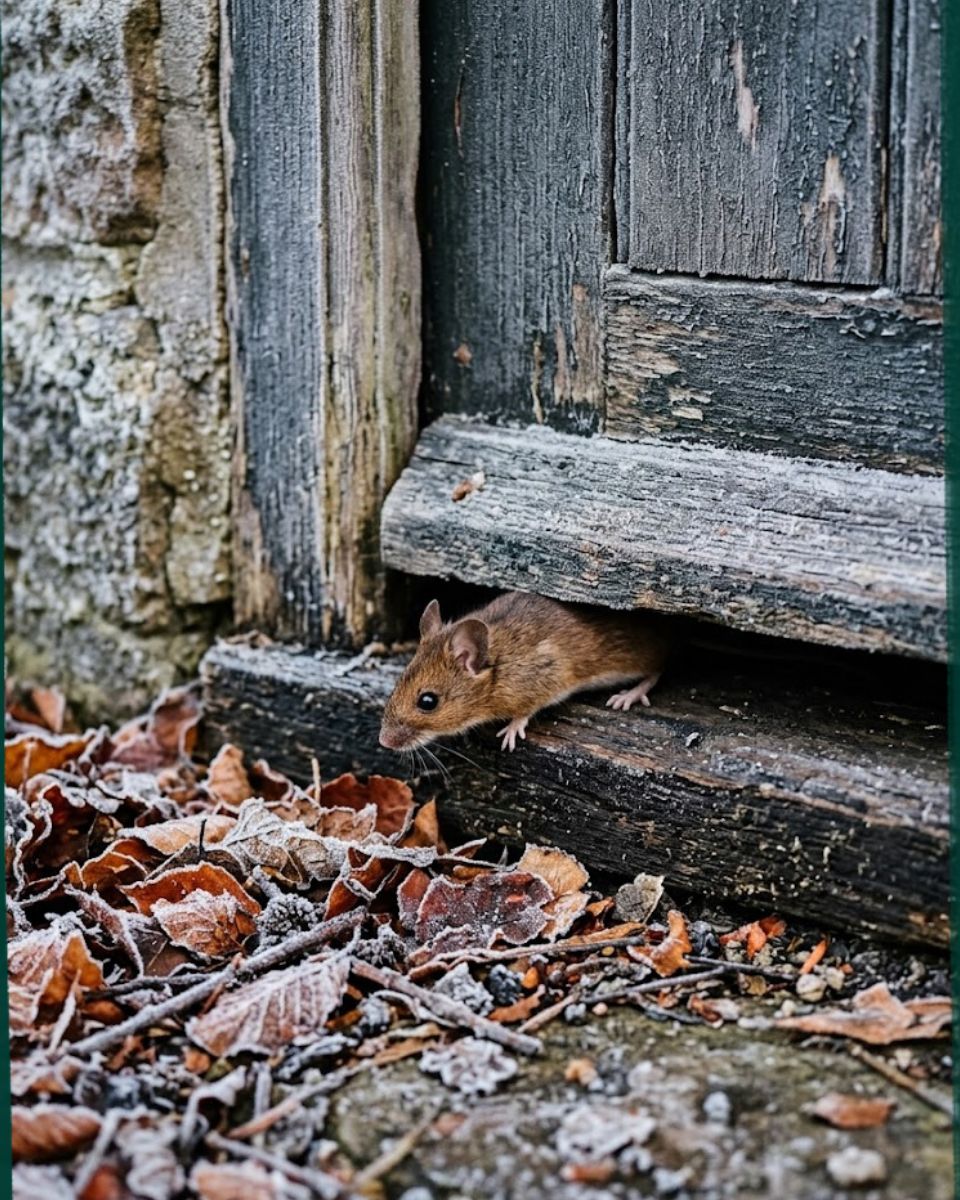
House mouse activity in Savannah follows a familiar pattern with peak invasion in October and November. Mouse populations build through summer and fall, with breeding cycles every 19–21 days producing 5–10 pups per litter. By October the cumulative population pressure pushes mice into indoor environments seeking food and nesting sites.
Unlike roof rats, mouse pressure stays elevated through the winter rather than peaking and declining. Indoor mouse populations, once established, breed year-round in Savannah’s climate and remain active through January, February, and March. Treatment delayed into mid-winter often faces fully-established multi-generational populations rather than the initial invasion phase.
Practical implication: mouse-proofing of interior penetrations is best completed before September. Active monitoring (snap traps, visual inspection) is most useful during October–November when initial invasion typically occurs.
Norway rats in Savannah don’t follow as sharp a seasonal pattern as roof rats or mice. The downtown sewer system and port-corridor populations maintain relatively constant activity year-round, with variation driven more by weather events than calendar season. Heavy rain events flush Norway rats out of sewers and burrows, pushing them toward surface activity and adjacent properties. Drought conditions push them toward water sources, which often means residential properties.
Marsh-edge properties face Norway rat pressure year-round with variation tied to tidal cycles and marsh vegetation rather than calendar season. Spring and fall transitions sometimes show population movement as marsh vegetation changes, but the baseline pressure is fairly constant.
Practical implication: Norway rat exclusion work and exterior bait station programs are valuable year-round rather than seasonally focused. Response to weather events (heavy rain, drought) sometimes prompts additional exterior monitoring.
Atlantic hurricane season runs June through November (with the peak August through October), and major weather events affect Savannah rodent populations in two distinct ways. Direct storm impacts displace rodent populations from damaged buildings and disturbed habitats, creating short-term spikes in nearby property activity. Storm-related building damage (roof damage, fence damage, structural damage) creates new entry points that weren’t present before the storm.
Post-storm response often includes assessment of new rodent entry points alongside the more obvious structural repair work. Properties that completed pre-season exclusion often face less post-storm rodent activity than properties with pre-existing vulnerabilities the storm exposed.
Practical implication: pre-hurricane-season exclusion work in May or June reduces vulnerability to storm-displacement pressure. Post-storm assessment specifically for rodent entry points complements general repair work.
Summer is typically the lowest rodent-pressure period in Savannah but it’s never zero. Roof rats remain active in attics with established populations. Mice continue breeding. Norway rats follow water and food. The relative quiet of summer compared to fall and winter is more about reduced new-invasion pressure than absence of activity.
Summer is the best season for preventive exclusion work — building envelopes are accessible without weather complications, technicians have more scheduling flexibility, and work completed in summer is in place before the fall invasion peaks. Most Savannah homeowners who address rodent prevention proactively schedule the work between June and August.
Vacation rentals and seasonal properties (particularly on Tybee Island and the coastal communities) face different seasonal patterns than year-round residences. Peak rental season (March through October) brings continuous guest turnover with associated food waste, packaging, and short-term occupancy that creates rodent attraction. Off-season (November through February) brings reduced human presence that allows rodent populations to establish in vacant properties.
Practical implication: vacation rental rodent programs typically use quarterly monitoring rather than annual treatment, with attention to seasonal occupancy patterns. Pre-season inspection in February or March prepares properties for peak rental season; post-season inspection in November addresses any establishment that occurred during occupancy.
Same-day inspection, locally owned, 90-day exclusion warranty across Chatham, Effingham, Bryan, and Liberty Counties.
📞 Call (912) 305-0115Related blog posts: Savannah climate and rodents · ultimate 2026 guide · prevention tips.
Related services: residential rodent control · attic rodent proofing · exclusion sealing.
Trusted Coastal Georgia rodent specialists since 2023. Same-day inspection and quote — no charge.
📞 Call (912) 305-0115