House mice can squeeze through a gap the width of a pencil. By the time you see droppings in the pantry, there's usually a population in the walls. We trap, seal, and verify it's clear β and we don't sell you anything you don't need.

Mice control in Savannah is the trap, seal, and verify process used to clear house mouse populations from a home or business and keep them out long-term. The house mouse (Mus musculus) is the single most common rodent inside Savannah-area homes. Unlike rats, mice nest indoors year-round, breed roughly every two months when conditions are good, and exploit gaps as small as a quarter inch β which means almost every Savannah home has at least some vulnerability. Our mice control programs combine targeted interior trapping, comprehensive entry-point sealing, sanitation review, and a follow-up monitoring visit. Typical residential scope runs $300β$900 depending on infestation level and exclusion scope.
Mice in Savannah follow a different calendar than rats. The biggest indoor mouse pressure hits in October through February as temperatures drop and outdoor food sources shrink β but Savannah's mild winters and year-round humidity mean indoor mouse populations can sustain themselves twelve months a year once established. We've cleared infestations in the middle of July as often as in January.
The other Savannah-specific factor is housing stock. The Historic District, Victorian District, and Ardsley Park have homes built before mouse-proofing was a construction consideration. Original lath-and-plaster walls, knob-and-tube remnants, gaps around plumbing penetrations, and unfinished basements give mice routes between floors and into kitchens that newer construction simply doesn't have. Even modern Pooler and Richmond Hill subdivisions have weak points β garage door corners, utility entries, dryer vents β but the older the house, the more vulnerable.
Droppings and gnaw evidence are checked against species markers. House mouse droppings are rice-grain sized; rat droppings are larger and shaped differently. The treatment plan depends on the answer.
Mice exploit gaps as small as 6mm. We check around plumbing penetrations, dryer vents, sill plates, garage door corners, and any utility entry into the building.
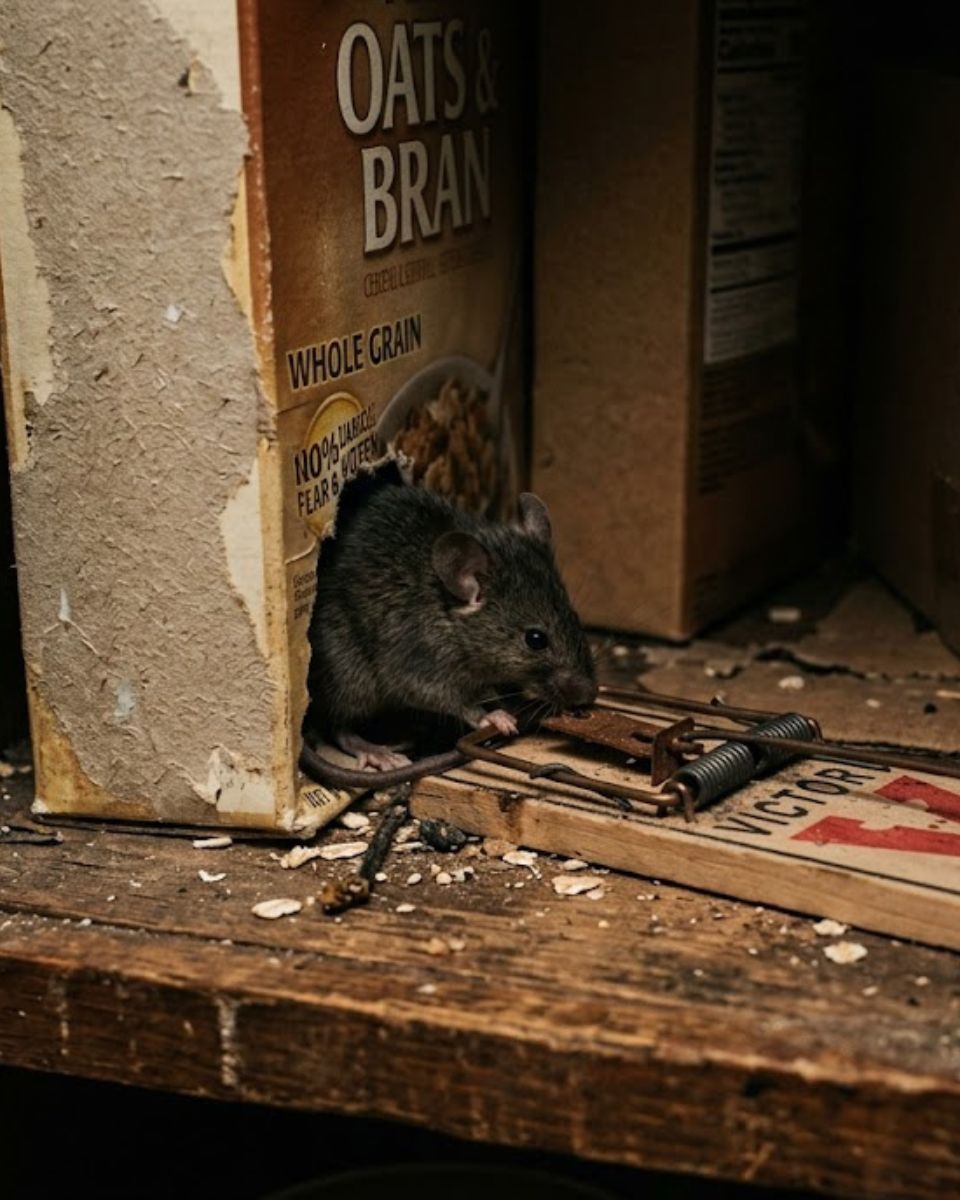
Snap traps placed perpendicular to walls along active runways. We don't broadcast β we target. Bait is typically peanut butter or a similar high-protein lure.
Interior gaps sealed with copper mesh and sealant where appropriate. We avoid expanding foam in visible areas β it doesn't hold up to chewing and looks bad.
Follow-up visit checks every trap, verifies droppings have stopped accumulating, and we either close out the job or extend treatment if a second nest is present.
Mice control pricing depends on the size of the infestation, the building, and how extensive the exclusion work needs to be. Single-room cases at the early stage are cheaper than whole-house cases with established wall populations.
| Scope | What's included | Typical range |
|---|---|---|
| Early-stage single area | Inspection, traps, basic sealing, 1 follow-up | $300β$450 |
| Standard whole-home program | Above + comprehensive interior exclusion + perimeter check | $500β$900 |
| Heavy infestation / large home | Extended trapping period, full interior sealing, sanitation guidance | $900β$1,800 |
| Multi-unit / rental property | Per-unit programs for landlords and property managers | $200β$400/unit |
All prices include the initial inspection, treatment, and a written summary. Final quote is provided in writing before any work begins β no surprise fees.
| DIY mice control | Professional service | |
|---|---|---|
| Trap placement | Most homeowners place traps in the middle of rooms or near droppings, where mice rarely run. Catch rates stay low. | Traps placed perpendicular to walls along active runways. Catch rate is typically 80%+ in the first week. |
| Entry-point sealing | Steel wool stuffed in obvious holes β works for a few months until mice chew or push through. Real entry points usually missed. | Quarter-inch+ gap audit on the whole building envelope. Copper mesh and sealant chosen per surface for long-term hold. |
| Verification | “Haven’t seen one in a week” β but mice can stay quiet for 10+ days, and a stable population just shifts to lower-traffic hours. | Active monitoring stations + 10β14 day follow-up inspection. We verify with droppings counts, not absence-of-sighting. |
| Time to resolve | 3β8 months on average β and 30β40% of DIY cases never fully resolve. | Typically 2β3 weeks to clear active population. Exclusion holds for years. |
If you've seen mouse droppings or heard scratching at night, the population is already established. We can be there today.
π Call (912) 305-0115House mouse droppings are about the size of a long-grain rice kernel β 3β6mm, with pointed ends. Rat droppings are noticeably larger (12β18mm), thicker, and shaped like olives or capsules. The species matters because mouse traps catch mice but not rats, and rat baits in mouse-only situations are overkill and unnecessary. We confirm visually before recommending a treatment plan.
For a typical early-stage infestation, 7β14 days from initial treatment to no new droppings. Heavier infestations with established wall populations can take 3β4 weeks. The follow-up visit at 10β14 days is where we either close the job out or extend. Exclusion sealing is done in a single visit; trap-and-verify is what takes the time.
No β repeated independent testing has shown ultrasonic devices have no measurable effect on mouse or rat behavior beyond the first 24β48 hours, when habituation sets in. Save the money. Sealing entry points and removing food sources is what actually works.
Almost always because the entry points were never properly sealed. Mice push indoors as temperatures drop and outdoor food shrinks, and they use the same routes year after year β dryer vents, garage door corners, gaps around plumbing, sill-plate gaps. We can identify the recurring entry points during inspection and seal them so next winter is different.
Mouse droppings, urine, and dander can carry hantavirus, salmonella, and a range of bacteria. The risk in a typical Savannah home is low but real, particularly in pantries and around food-prep areas. Beyond illness, mouse allergens are a documented asthma trigger in children. Removing droppings safely β N95 mask, disinfectant first, then wipe β is part of clearing the infestation.
Modern snap traps kill instantly when set properly. We use covered stations in homes with pets or curious children. The alternative β glue boards β we generally don't deploy because they kill slowly and trap non-target animals. Live traps shift the disposal problem to you and aren't more humane in practice because relocated mice almost always die from cold, predation, or starvation.
Yes. Renters can absolutely hire us directly. For larger jobs we typically recommend looping in the landlord since exclusion sealing affects the property itself, but interior trapping, sanitation, and the initial inspection don't require landlord approval. We can provide a written report for you to share with your property manager if that helps.
Yes β see our property management rodent control service for details. We handle multi-unit complexes across Savannah and Pooler with per-unit treatment plans, building-wide exclusion projects, and monthly maintenance programs that meet most landlord disclosure and pest-control requirements.
Three things. We're locally owned and dispatched β when you call you reach us directly, not a national call center routing to whoever's nearest. We treat exclusion as the centerpiece of the work, not an upsell. And we don't lock customers into multi-year contracts; our recurring programs are month-to-month.
Related Savannah services: full mouse infestation treatment Β· mouse-proofing entry-point sealing Β· our residential rodent program.
Trusted Coastal Georgia rodent specialists since 2023. Same-day inspection and quote β no charge.
π Call (912) 305-0115