Ardsley Park is the canonical Savannah roof rat neighborhood β Washington Avenue’s mature live-oak canopy, 1920s housing stock with attic vulnerabilities, and pecan trees dropping food year-round. The treatment approach is attic-focused and tree-canopy-aware.

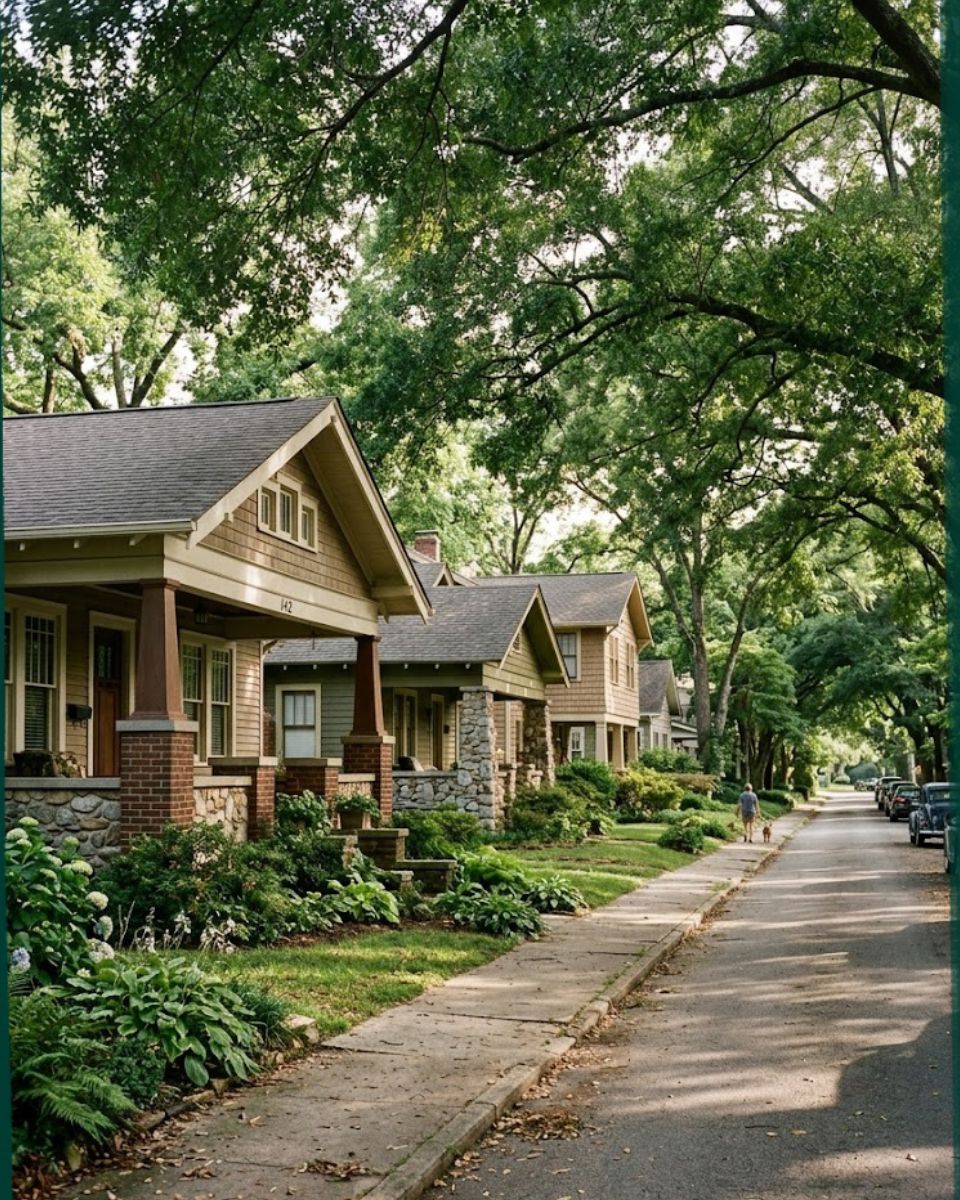
Ardsley Park’s rodent pressure is overwhelmingly a roof-rat story, and it comes from the trees. Washington Avenue’s live-oak canopy is among the densest in residential Savannah. The streets running south of Washington Avenue β particularly the stretch between Bull Street and Waters Avenue β have mature pecan, live-oak, and magnolia canopies that create overhead travel routes between yards and roofs. Roof rats use those routes to reach attics directly without ever touching the ground.
The pecan trees specifically matter because they drop food year-round (pecans plus secondary fall from squirrels and birds) and sustain populations through periods when other food sources are scarce. Ardsley Park homes near mature pecans have effectively continuous roof-rat pressure regardless of season.
Ardsley Park was developed primarily in the 1910s through 1930s, with infill construction through the 1950s. The defining housing type is the Craftsman bungalow β 1920s and 1930s single-story or story-and-a-half homes with brick-pier or perimeter brick foundations, original wood siding, and unfinished or partially-finished attics accessed through ceiling hatches.
The attic spaces in classic Ardsley Park bungalows are roof rat ideal β accessible through weathered soffit returns, gable vents that have settled or torn, and roofline gaps that have opened over 90+ years of building settling. The unfinished attic floors usually have blown-in or batt insulation that supports nesting. Exclusion work on these homes focuses heavily on the roofline.
Larger Ardsley Park homes (the early 20th-century estates on the larger lots near Washington Avenue itself) have multiple attics, complex rooflines, and typically need more extensive exclusion work than the standard bungalows.
Roof rats dominate Ardsley Park rodent work β easily 70β80% of our calls in this neighborhood. The tree-canopy access is constant, and most homes have at least seasonal roof-rat pressure. Established attic populations are common; we routinely find evidence of multi-year roof-rat activity in attics we’re inspecting for the first time.
Norway rats appear occasionally, typically on properties with marsh-edge proximity (southern edge near Forest Park) or near commercial corridors (Waters Avenue). Norway rat work in Ardsley Park is meaningfully less common than roof rat work.
House mice appear in the older bungalows with original construction features β knob-and-tube remnants, sill-plate gaps, original lath-and-plaster wall voids. Mouse pressure is seasonal (OctoberβMarch peak) and responsive to interior sealing work.
Every rodent service we offer is available across this neighborhood. The most-requested for this area:
Ardsley Park roof rat specialists β 1920s bungalow exclusion, attic trapping, restoration-friendly work.
π Call (912) 305-0115The combination of mature live-oak canopy (overhead access to roofs), pecan trees (year-round food), and 1920s bungalow attic construction (multiple entry vulnerabilities) creates near-ideal roof-rat conditions. Ardsley Park has the right tree mix, the right housing era, and the right neighborhood density to sustain heavy continuous roof-rat populations.
Probably not β pecans are valuable trees and removing them won’t eliminate roof-rat pressure (the population travels across the neighborhood, not just from your yard). Targeted branch trimming where pecan branches overhang or touch your roof reduces direct roof access. Most certified arborists can prune branches without damaging the tree.
Depends on accumulation. Light droppings (a few dozen, isolated location) usually indicate recent or limited activity. Heavy droppings (carpet of droppings across insulation, multiple nest sites, urine staining on wood) indicates established multi-month or multi-year activity. Either way, inspection is the first step β we can scope the cleanup and exclusion needed.
Standard whole-home program: $900β$1,600. Includes inspection, attic trapping, roofline exclusion sealing, follow-up verification, 90-day warranty. Larger homes or heavier infestations: $1,600β$2,500. Add attic cleanup and insulation replacement if needed (separate scopes).
Generally not β most homeowners policies exclude rodent damage as wear-and-tear. Specific consequential damage (electrical fire from chewed wiring) is sometimes covered. Worth a call to your carrier; we provide documentation if you want to submit a claim.
Yes β Ardsley Park bungalows often have features worth preserving (original soffit returns, ornate trim, original windows). We use restoration-friendly exclusion techniques on these homes β hidden hardware cloth, color-matched sealant, no visible damage from the curb after we’re done.
Typical 15β25 minutes from our office on Gaston Street. Same-day dispatch available across the neighborhood.
Not necessarily, but the population travels across yards through the canopy. Treating your home blocks your entry points but doesn’t reduce the neighborhood-wide population. You’ll continue to face pressure on the building envelope; the exclusion is what keeps them out. Neighbors who treat too reduce broader pressure for everyone.
Adjacent service areas: Baldwin Park, Parkside, Kensington Park, Magnolia Park.
Trusted Coastal Georgia rodent specialists since 2023. Same-day inspection and quote β no charge.
π Call (912) 305-0115