Downtown Savannah is the densest rodent-pressure zone in Coastal Georgia. The port corridor, the restaurant rows, the 19th-century housing stock, and the year-round tourist food traffic all stack into a concentrated Norway and roof rat environment that needs specialized work.

Downtown Savannah’s rodent profile comes from three overlapping pressure sources. The Savannah River port has supported Norway rat populations for nearly 300 years. The downtown sewer infrastructure carries those populations between blocks. And the restaurant density on Bay Street, Broughton Street, River Street, and City Market produces concentrated exterior food sources — grease bins, dumpsters, dock receiving — that sustain rat populations year-round.
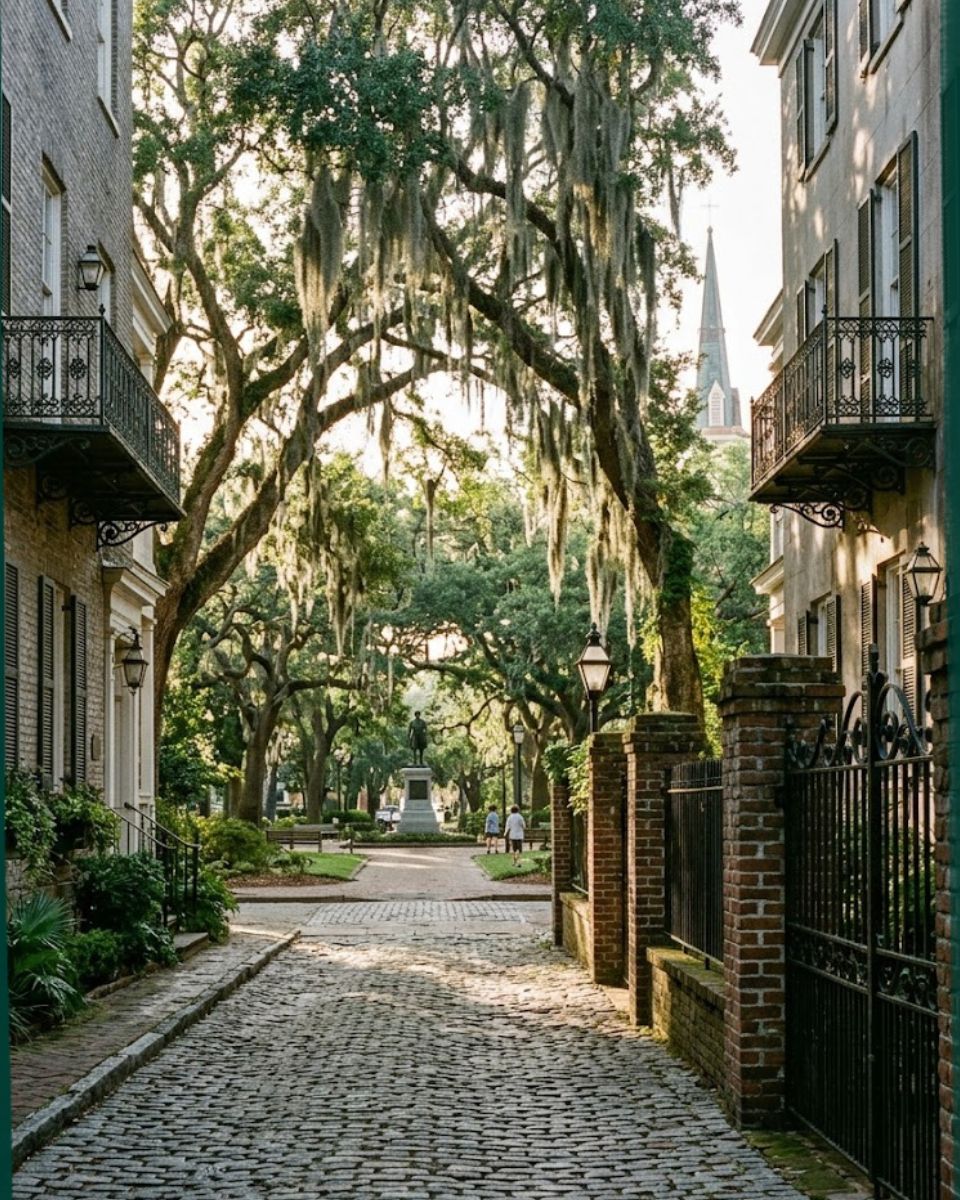
Layered on top: the Historic District’s 22 squares create green spaces with food sources (tourist litter, restaurant runoff, sidewalk seating) and harborage (ornamental landscaping, mature trees). The live-oak canopy across the squares provides overhead travel for roof rats. The housing stock — much of it 19th-century brick or wood construction with original brick-pier foundations — has built-in rodent vulnerabilities that newer construction doesn’t have. Downtown work usually involves both Norway rats at ground level and roof rats overhead, plus mice in the older buildings.
Downtown housing spans Federal-era rowhouses (1810s–1850s), Victorian mansions (1860s–1900s), early 20th-century apartment buildings, and modern conversions in former warehouses and commercial buildings. Each era brings different rodent considerations.
The 19th-century rowhouses on Gaston, Jones, and Taylor Streets typically have brick-pier foundations, original plaster walls, and unfinished or partially-finished attics — all classic Norway rat and mouse vulnerabilities. Exclusion work on these buildings needs to be restoration-friendly (see our historic home rodent control service). Federal-era buildings often have original tabby foundations that have shifted over two centuries, leaving gaps that Norway rats exploit.
Converted warehouse residences (in the City Market area, near River Street) often have rodent issues from the original building’s commercial history — Norway rat populations that established during decades of warehouse use can persist after residential conversion. Sealing these typically involves extensive masonry and dock-area work.
Norway rats dominate ground-level work downtown. The sewer system, restaurant corridors, and port proximity all support continuous Norway rat populations. Restaurant adjacency is the single biggest predictor — if you live within two blocks of an active restaurant cluster, you face Norway rat pressure regardless of the cleanliness of your own property.
Roof rats are heavy in the square-adjacent housing where the live-oak canopy extends to the roofline. Properties on Bull Street, Drayton Street, and the square perimeters get tree-canopy access that puts roof rats in attics seasonally (October–February peak) and sometimes year-round.
House mice are present in most older buildings, particularly those with original plaster walls and unsealed sill plates. Mouse pressure is more seasonal (heaviest October–March) and more responsive to single-property exclusion work than rat pressure is.
Every rodent service we offer is available across this neighborhood. The most-requested for this area:
Downtown Savannah rodent control — Historic District, restaurant corridor, and Federal-era housing.
📞 Call (912) 305-0115Yes — meaningfully. Downtown housing within 2–3 blocks of the restaurant corridors faces continuous Norway rat exterior pressure that suburban housing simply doesn’t. Even well-maintained downtown homes need ongoing exclusion attention because new pressure arrives from the broader corridor; they aren’t isolated from neighborhood-wide population dynamics.
Yes — we specialize in restoration-friendly exclusion for Historic District properties. Copper mesh in masonry, lime mortar on foundation gaps, hidden hardware cloth behind original soffit returns. See our historic home rodent control service for the full approach.
Rats in the squares are a city-managed concern — the Park & Tree Department handles vegetation, the city manages waste collection, and pest pressure in public spaces is generally outside private pest-control scope. What you can do is harden your own property so the broader-corridor pressure doesn’t become your indoor problem.
Yes — carriage houses (whether owner-occupied or rented) often have their own brick-pier foundations and need their own exclusion attention separate from the main house. They’re also commonly converted to short-term rentals, which adds rental-specific scope (see Airbnb rental property services).
Most exclusion work stays below the threshold that requires Historic Review Board approval. Major exterior work technically requires review; minor sealing typically doesn’t. We follow Historic District work standards regardless of permit threshold — restoration-friendly materials, hidden installation, color-matched finishes.
Typical 2–3 hours during operating hours (9AM–9PM). Downtown addresses are closest to our office on Gaston Street so the dispatch time is shortest. Restaurant emergencies and active building events route to priority dispatch.
Yes — multi-unit historic buildings (multiple residential units in a single Federal-era or Victorian building) need building-level rather than unit-level rodent programs. We coordinate with property managers and building owners. See our property management rodent control service for multi-unit scope.
Slightly — restoration-friendly historic work runs higher than standard exclusion on modern buildings because of material costs and technique time. A downtown historic home full rodent program typically runs 20–40% above a comparable Pooler or Richmond Hill suburban program.
Adjacent service areas: Victorian District, Beach Institute, East Savannah, Cuyler-Brownsville.
Trusted Coastal Georgia rodent specialists since 2023. Same-day inspection and quote — no charge.
📞 Call (912) 305-0115