βœ“ Licensedβœ“ Insuredβœ“ Locally Ownedβœ“ Open 9AM–9PM Β· 7 Days
Brick-pier & vented crawl spaces

Crawl Space Rodent Sealing in Savannah, GA

Most Savannah homes built before 1960 sit on brick-pier foundations with vented crawl spaces β€” and those crawl spaces are the single biggest Norway rat entry vector in the city. Sealing them properly is a specialty scope, not a general exclusion task.

Same-day Β· Open 9AM–9PM Free inspection Chatham + 3 counties
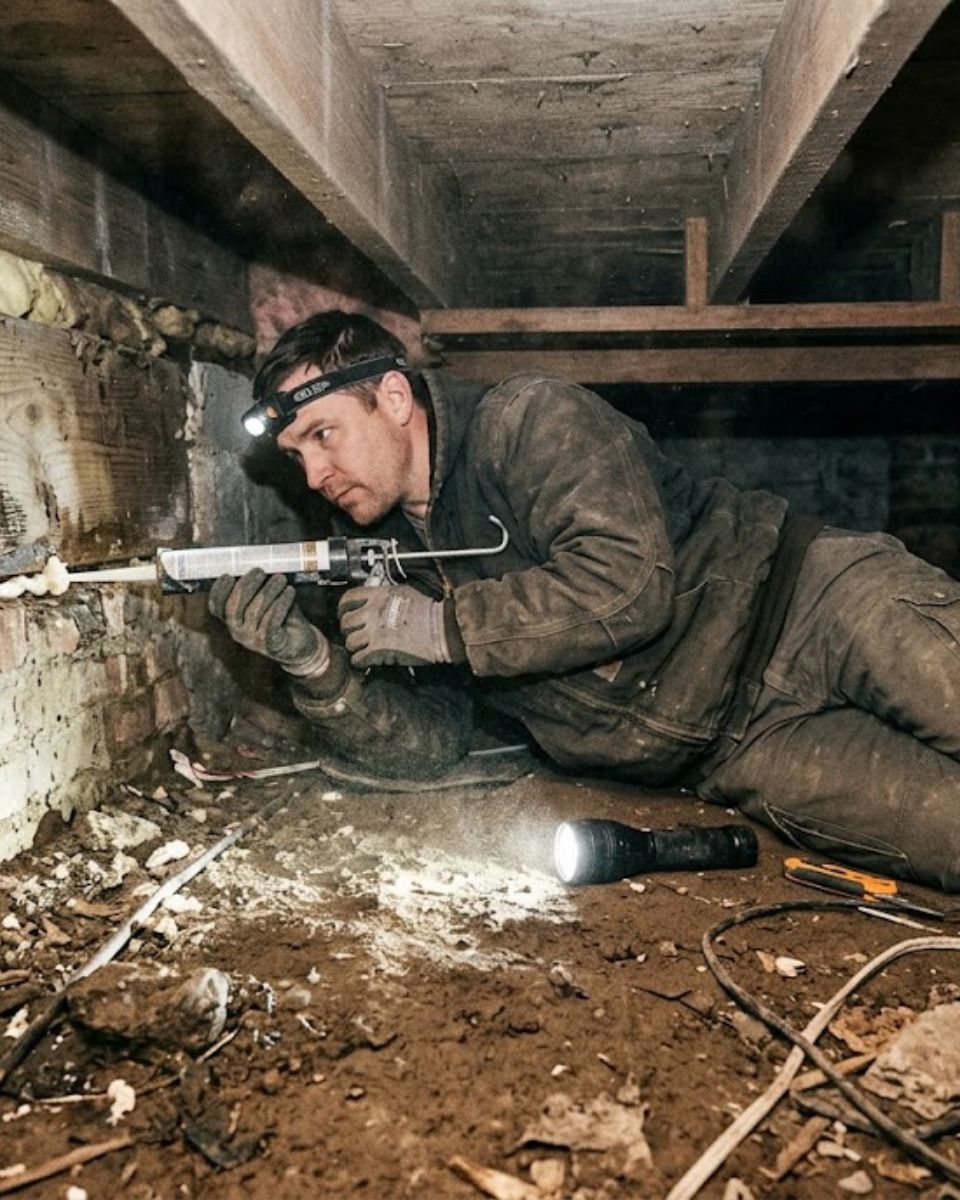
Technician sealing crawl space gap β€” crawl space rodent sealing in Savannah GA

Crawl-space rodent sealing in Savannah is the focused exclusion work that closes Norway rat and mouse access through vented crawl-space foundations, brick-pier supports, foundation access doors, and perimeter ground-level gaps. It’s distinct from whole-building exclusion because crawl-space work requires confined-space entry, headroom-restricted sealing, and material choices that hold up to year-round humidity and standing-water conditions specific to Coastal Georgia. Typical scope: $600–$1,800.

Why this matters in Savannah

Savannah’s crawl-space rodent problem is largely a Norway rat problem, and it’s structural in two senses. First, the foundations themselves: the brick-pier foundations under most Historic District homes, Ardsley Park bungalows, Gordonston cottages, and pre-1960 Savannah builds were never designed to exclude rodents. Brick piers stand 18–30 inches off the ground with open spans between them, perimeter brick or block walls have planned vent openings, and access doors are typically wood that warps and gaps in Coastal Georgia humidity. All of those are entry points.

Second, the conditions inside: crawl spaces under Savannah homes stay humid year-round, often have standing water during heavy-rain seasons, and frequently include damaged or missing vapor barriers. The conditions support Norway rat populations indefinitely once they’re in β€” and the rats damage HVAC ducting, vapor barriers, sub-floor insulation, and structural wood while they’re there. Sealing the crawl space requires both perimeter exclusion (stopping new entry) and ongoing access for monitoring (so future activity is caught early).

What's included

Our process

How we work this service

Inspect from inside

Confined-space entry to the crawl space β€” we suit up and go in. Every pier, every vent, every penetration checked from below as well as from outside.

Map the damage

Existing rodent damage documented β€” chewed insulation, damaged ducting, vapor-barrier breaches, urine staining on structural wood. Photos for your records and any insurance use.

Quote the scope

Sealing scope produced in writing. Vapor-barrier replacement and HVAC repair scoped separately if needed β€” those are different specialty trades.

Seal systematically

Vent rescreening first, then brick-pier gap work, then access door, then utility penetrations. Most work is from outside; pier and utility work often requires re-entry.

Verify and warranty

Final walk with the customer. Written documentation. 90-day warranty against re-entry through sealed points applies.

Cost of crawl space rodent sealing in Savannah, GA

Crawl-space sealing pricing depends on perimeter length, brick-pier count, and whether access doors and utility penetrations need replacement vs. sealing.

ScopeWhat's includedTypical range
Small home (under 1,500 sqft)Standard perimeter, single access door, typical penetrations$600–$1,000
Mid-size home (1,500–3,000 sqft)Larger perimeter, more pier work, multiple penetrations$900–$1,400
Historic home with masonry foundationRestoration-friendly sealing, mortar repair, original-feature considerations$1,200–$1,800
Vapor barrier replacement (add-on)Full crawl-space vapor barrier replacement (separate scope)$1.50–$3.50/sqft

All scopes include initial inspection and a written quote before work begins.

Real Solutions for Savannah’s Year-Round Rodent Pressure

Crawl-space and brick-pier sealing across Savannah’s historic and pre-1960 housing stock. Free inspection.

πŸ“ž Call (912) 305-0115

Frequently asked questions

How do I know if rodents are getting into my crawl space?

Two indicators: visible rodent damage in the crawl space (chewed insulation, droppings on vapor barrier, gnaw marks on ducting or wood), or visible entry points around the perimeter (gaps in vent screens, gaps around piers, warped access door). If you haven’t looked inside the crawl space recently, an inspection is worth doing even without symptoms β€” most Norway rat crawl-space damage runs for years before homeowners notice.

Can you seal a crawl space that already has standing water?

Sealing work itself can happen with some standing water present, but the underlying drainage issue should be addressed for the work to hold up. Standing water indicates either a grading problem outside, a plumbing leak inside, or inadequate drainage β€” all of which keep the crawl space humid enough to attract continued rodent and pest activity.

Will sealing the crawl space affect ventilation?

No β€” we don’t close off ventilation, we rescreen it with rodent-resistant hardware cloth. Air still moves through; rats don’t. The Georgia residential code typically requires either passive crawl-space venting or active conditioning; either approach works with our sealing scope.

What about encapsulated crawl spaces?

If your crawl space is encapsulated (sealed-perimeter with conditioned air), the rodent vulnerabilities are different and the sealing scope is different. We work with encapsulated crawl spaces but the inspection focus shifts to perimeter seals, access points, and any penetrations into the conditioned space. Pricing typically similar to standard scope.

How long does crawl-space sealing take?

Most single-family residential crawl-space sealing completes in one full day β€” typically 5–8 hours including inspection, exterior sealing, and interior pier and utility work. Larger or more complex foundations can extend to a day and a half.

Do you do crawl-space cleanup as part of this service?

Cleanup is a separate scope. Sealing addresses the entry points; cleanup addresses what’s already accumulated inside. Most customers do sealing first, then cleanup as a follow-up project β€” we can coordinate both if you want.

Can rodents damage HVAC ducting in the crawl space?

Yes β€” chewed HVAC ducting is one of the most common consequences of long-running crawl-space Norway rat activity in Savannah. We document any ducting damage we find during inspection and recommend HVAC repair as a follow-up. The HVAC repair itself is plumbing/HVAC trade work, not pest-control work β€” but we’ll point out what needs attention.

Will sealing affect my home’s humidity or moisture levels?

Sealing rodent entry points has no significant effect on humidity. The crawl space’s humidity is driven by ground moisture, ventilation cycle, and HVAC interaction β€” none of which our sealing changes. If you have an underlying humidity or moisture problem, that’s a separate scope (typically vapor barrier work or dehumidification).

Do you work in crawl spaces with limited access or low headroom?

Yes β€” most Savannah crawl spaces have limited access and low headroom; it’s the default for the housing stock. We work in tight conditions regularly and have the equipment for it. The constraint is access width (we need to be able to enter the space), not headroom β€” most jobs are done lying flat.

Related Savannah rodent services

Related Savannah services: whole-building exclusion programs Β· Norway rat control for crawl-space pressure Β· Savannah historic home rodent work.

From Forsyth Park to Tybee β€” We Cover All of Chatham

Trusted Coastal Georgia rodent specialists since 2023. Same-day inspection and quote β€” no charge.

πŸ“ž Call (912) 305-0115
πŸ“ž Call (912) 305-0115 β€” Same-Day Service