Once rodents nest in attic insulation, the contamination doesn’t clean out. Urine-soaked blown-in fiber, droppings worked into batts, scent permanently absorbed β replacement is the only way to restore the attic to clean condition.

Insulation replacement after rodent damage in Savannah is the removal of contaminated attic or crawl-space insulation and installation of fresh blown-in cellulose, fiberglass, or batt material. It’s the final step in full rodent remediation β done after active rodents are removed, the area is cleaned, and entry points are sealed. Cost typically runs $1.50β$3.50 per square foot for blown-in and $2.50β$5.00 per square foot for batt, plus removal and disposal costs.
Rodent-contaminated insulation in Savannah attics presents three problems that fresh insulation solves. First, ongoing health risk β droppings and urine in the insulation continue to off-gas and release particles even after rodents are gone, particularly when humidity rises (which is most of the year in Coastal Georgia). Second, ongoing odor β the smell of accumulated urine and dander persists for months or years in damp humid attic conditions. Third, performance β soaked and compressed insulation loses R-value, increasing the home’s cooling load through Savannah’s long hot summers.
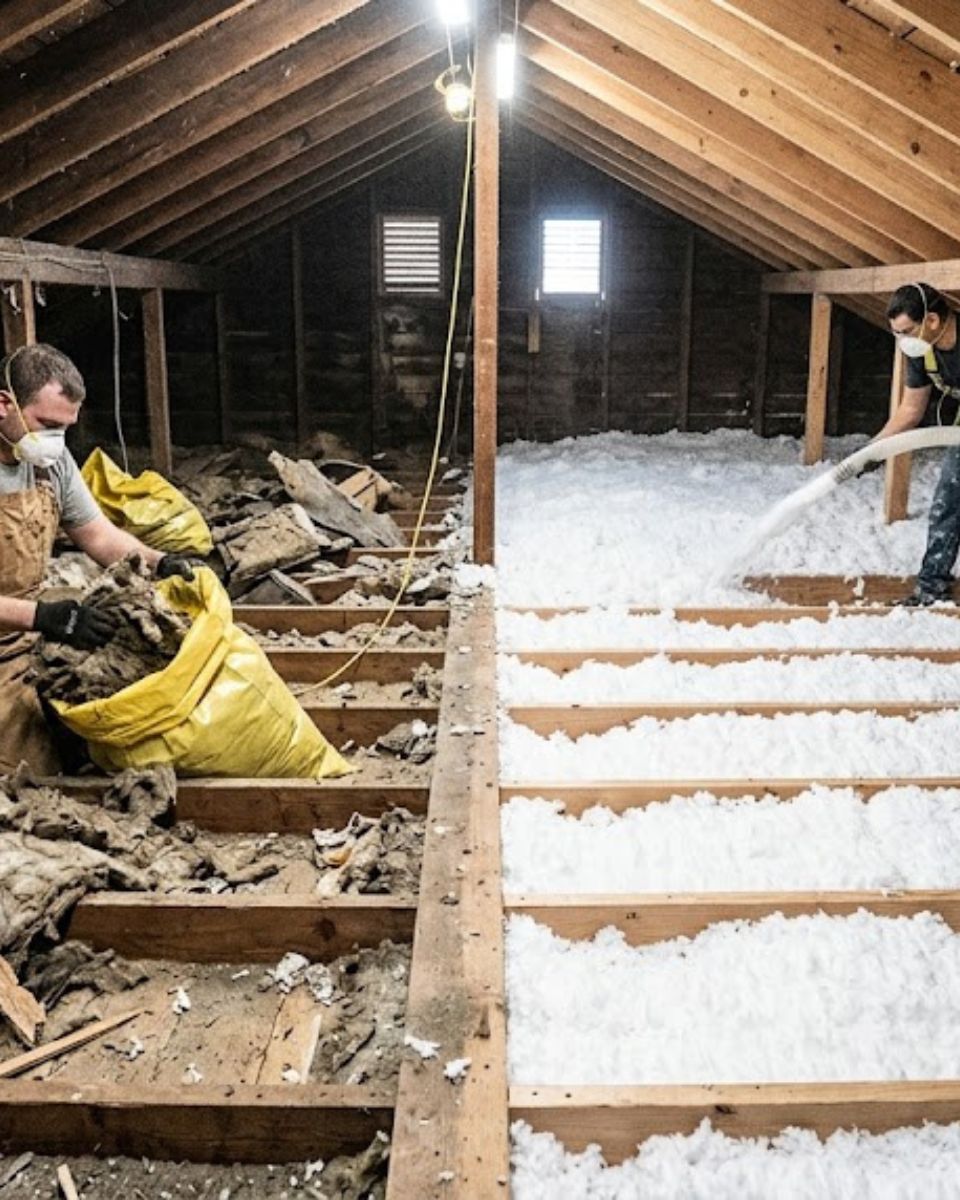
Replacement is technically straightforward but operationally substantial. Old contaminated insulation is removed with specialized vacuum equipment, bagged for disposal under Georgia waste rules, and the attic floor is sanitized before fresh material goes in. Most Savannah replacements specify blown-in cellulose for the cost and coverage advantage, though batt remains common in attics where the air-handler and ducting layout favor it. R-value typically restored to current Georgia code minimum (R-38) or higher.
Pre-replacement walk-through. We document existing R-value, contamination extent, and target replacement specification. Written quote before any work.
Plastic sheeting at attic access. Vacuum-equipment removal of old insulation. Sealed-bag disposal.
Attic floor disinfectant pass once old insulation is out. Structural wood inspected and treated where contamination was heavy.
Blown-in or batt installation to specified R-value. Coverage documented per Georgia code for new and replacement work.
Final R-value inspection. Written documentation of work performed, materials installed, disposal records.
Insulation replacement pricing is typically quoted per square foot of attic floor plus removal and disposal of old material. Specifications affect material cost; access and contamination affect labor.
| Scope | What's included | Typical range |
|---|---|---|
| Blown-in cellulose replacement | Per square foot installed to R-38 | $1.50β$2.75/sqft |
| Blown-in fiberglass replacement | Per square foot installed to R-38 | $1.75β$3.00/sqft |
| Batt insulation replacement | Per square foot installed to R-38 | $2.50β$5.00/sqft |
| Old insulation removal & disposal | Added to replacement cost based on contamination level | $0.75β$2.00/sqft |
Contaminated insulation removal and fresh installation across Savannah. Coordinated with rodent removal and exclusion.
π Call (912) 305-0115No β light or short-duration contamination sometimes leaves insulation salvageable. Sustained contamination (months of activity, heavy droppings, nesting throughout the insulation) almost always requires replacement for both health and odor reasons. We assess during inspection and recommend honestly. Some Savannah customers opt for partial replacement (heavily contaminated zones only); others want full attic replacement for peace of mind.
Likely yes, if your old insulation was compressed, damaged, or below current code R-value. Replacing R-19 batt with R-38 blown-in typically reduces cooling load 10β20% in Savannah’s climate. The energy savings don’t fully offset the replacement cost (rodent-driven replacement usually pays back over 7β15 years), but they offset some.
Current Georgia energy code recommends R-38 minimum for attic insulation in Climate Zone 2 (which includes Savannah). Many homeowners go higher (R-49 or R-60) for additional cooling savings, particularly in homes with significant attic-floor area. We can install to whatever specification you choose.
Both work in Savannah attics. Blown-in cellulose is slightly cheaper per R-value, slightly better at air-leak sealing, and made from recycled paper. Blown-in fiberglass is non-organic (less susceptible to mold if attic conditions degrade), slightly easier to work around in future attic visits. We don’t have a strong preference; either is appropriate.
Standard single-family attic replacement is typically one full day β 6β10 hours including removal, sanitization, and installation. Large attics or complex layouts can extend to two days.
Federal energy-efficiency tax credits sometimes apply to insulation upgrades. The specifics change with each tax year; we provide receipts and product documentation that supports tax filing. Check with your tax advisor for current-year eligibility.
Yes β exclusion sealing should be complete before new insulation goes in. Installing fresh insulation before the entry points are sealed means contamination starts again as soon as rodents re-enter. Sequence: rodent removal, cleanup, exclusion sealing, then insulation replacement.
Sometimes β particularly when the original damage was traceable to a covered cause (water intrusion from chewed plumbing, fire from chewed wiring). Standalone rodent-damage insulation replacement usually isn’t covered. Coverage varies meaningfully by carrier; worth a call to your insurance company before scheduling work.
Related Savannah services: full attic cleanup before replacement Β· roofline exclusion before re-insulating Β· active rodent clearance.
Trusted Coastal Georgia rodent specialists since 2023. Same-day inspection and quote β no charge.
π Call (912) 305-0115