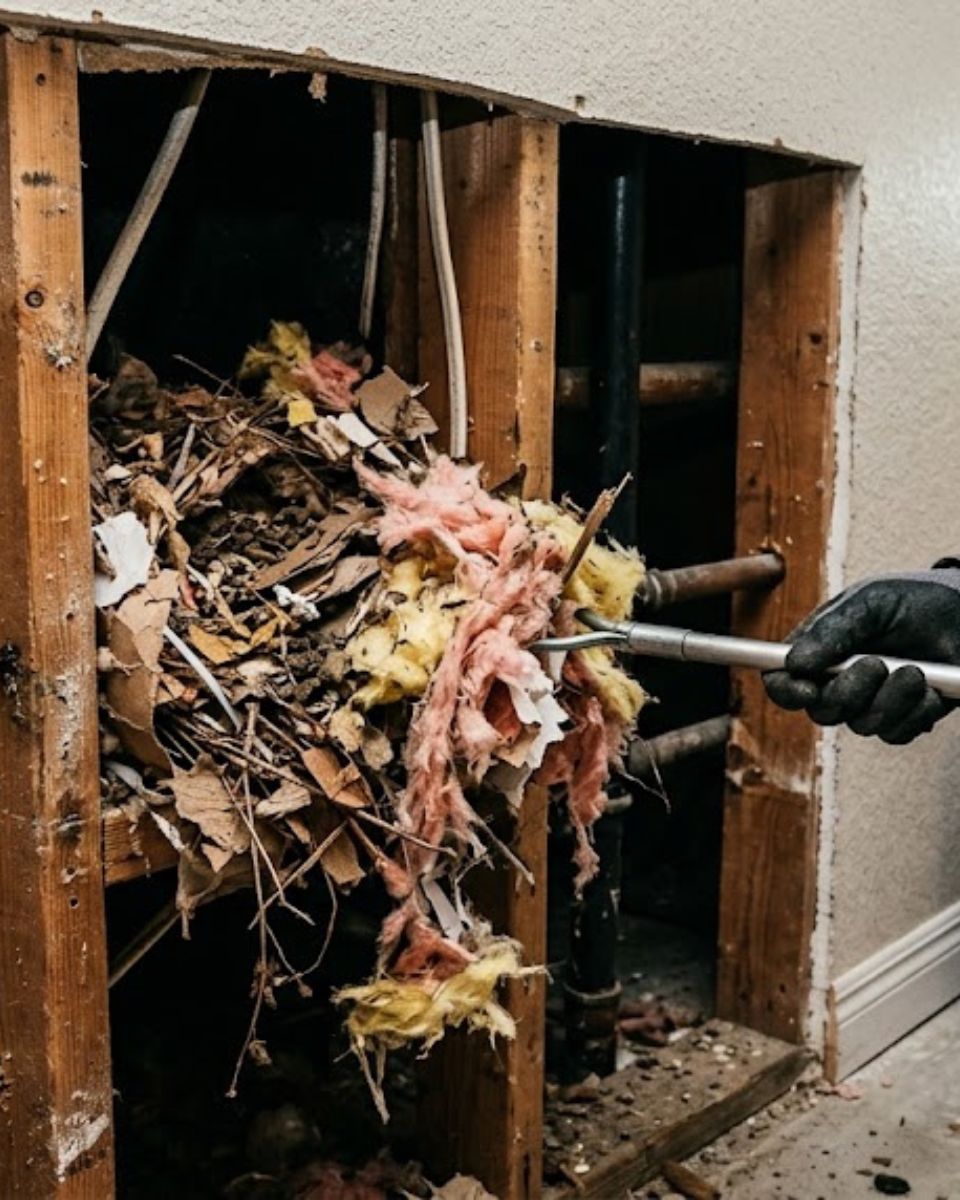
How do I know I have a rat nest and not just rat activity?
Three indicators. Concentrated droppings in one area (rather than scattered across a runway). Shredded nesting material — insulation pulled apart, paper or fabric shreds, plastic bag pieces — gathered in a corner. Strong rat scent that’s noticeably worse in one specific spot. If you have all three, there’s a nest at that location. If you only have scattered droppings, you have a travel route, not a nest site.
Will removing the nest stop the rats from coming back?
Combined with entry-point sealing, yes — the nest removal eliminates the scent that attracts secondary rats and the sealing prevents new entry. Removing the nest without sealing the entry, the rats simply rebuild within weeks. Sealing the entry without removing the nest, the scent attracts new rats that find alternate entries. Both together is the durable fix.
Do you cut into walls to find nests?
Rarely — most nests can be located and removed without cutting. We use scope cameras through existing access points (utility penetrations, attic access, crawl entry) to find the nest before any cutting. When cutting is genuinely needed, we use the smallest practical access hole (4–6 inches) and discuss with you before proceeding.
What about babies in the nest?
Juvenile rats in active nests are part of the standard removal scope. If the nest is being removed mid-litter cycle, the entire nest including unweaned young is removed and disposed of together. This is one of the reasons nest removal is sometimes scheduled after a few weeks of active trapping has reduced the adult breeding pair — the litter is cleared incidentally.
Can rats nest in my HVAC ducting?
Yes — particularly Norway rats in crawl-space ducting and roof rats in attic ducting. Nests inside ductwork are a specific concern because air handling distributes scent and allergens through the home. We document any ducting-located nests during inspection; ducting cleaning and replacement is HVAC trade work that we coordinate with.
How long does nest removal take?
Most accessible nests take 1–3 hours including inspection, removal, sanitization, and sealing. Difficult-access nests (wall voids, multiple sites) can take 4–6 hours. Some cases require a return visit if additional nests are discovered during the first pass.
Will I smell ammonia after the nest is removed?
The ammonia smell from accumulated urine fades over 24–72 hours after removal and sanitization. The disinfectant pass during removal neutralizes most of it immediately; what remains is typically off-gassing from soaked insulation in the immediate area, which fades quickly with ventilation.
Is nest removal covered by my insurance?
Sometimes — if the rodent damage triggered a covered claim (chewed wiring causing fire, plumbing damage causing water claim), nest removal is sometimes included in the broader remediation scope. Standalone nest removal usually isn’t covered. We provide documentation if you want to submit a claim.