A dead rat or mouse in a wall produces a smell that runs 2β6 weeks if you wait it out. Most people can’t. We locate dead rodents using scent triangulation and scope cameras, then remove them with the minimum possible drywall damage.

Dead rodent removal in Savannah is the locating, accessing, and removing of dead rodents from wall cavities, attic spaces, crawl spaces, HVAC ducting, and other concealed locations. It’s a same-day service in most cases β the smell is acute enough that customers don’t want to wait. We use scent triangulation, scope cameras, and targeted access to remove the carcass with minimum disruption to the building. Typical scope: $250β$600.
Dead rodents in Savannah produce particularly strong odor for two reasons: humidity accelerates decomposition (a dead mouse in a Savannah wall in August produces more aggressive odor than the same mouse in a Boston wall in January), and the city’s housing stock includes a lot of wall-and-void spaces where the carcass isn’t accessible without intervention. Brick-pier crawl spaces, unfinished attics, plaster wall voids in historic homes, and HVAC ductwork all hide carcasses where natural decomposition would take a month or more.
Most dead-rodent calls follow a recent rodent issue β a property recently had active infestation, trapping or baiting cleared the population, and one or more carcasses ended up in inaccessible spots. Occasionally a carcass is discovered in a long-empty home or a recently-acquired property. Either way, the response is the same: locate fast, access with minimum damage, remove, sanitize, identify how the rodent got there (so the entry point can be sealed).
Walk-through with the customer pointing out where the smell is strongest. We narrow the location using scent triangulation.
Before any cutting, we use scope cameras through existing wall penetrations (outlet boxes, vent covers, baseboard removal) to see if we can locate visually.
If scope-camera location isn’t possible, we cut a 4β6 inch access hole at the strongest scent location. Discussed before cutting.
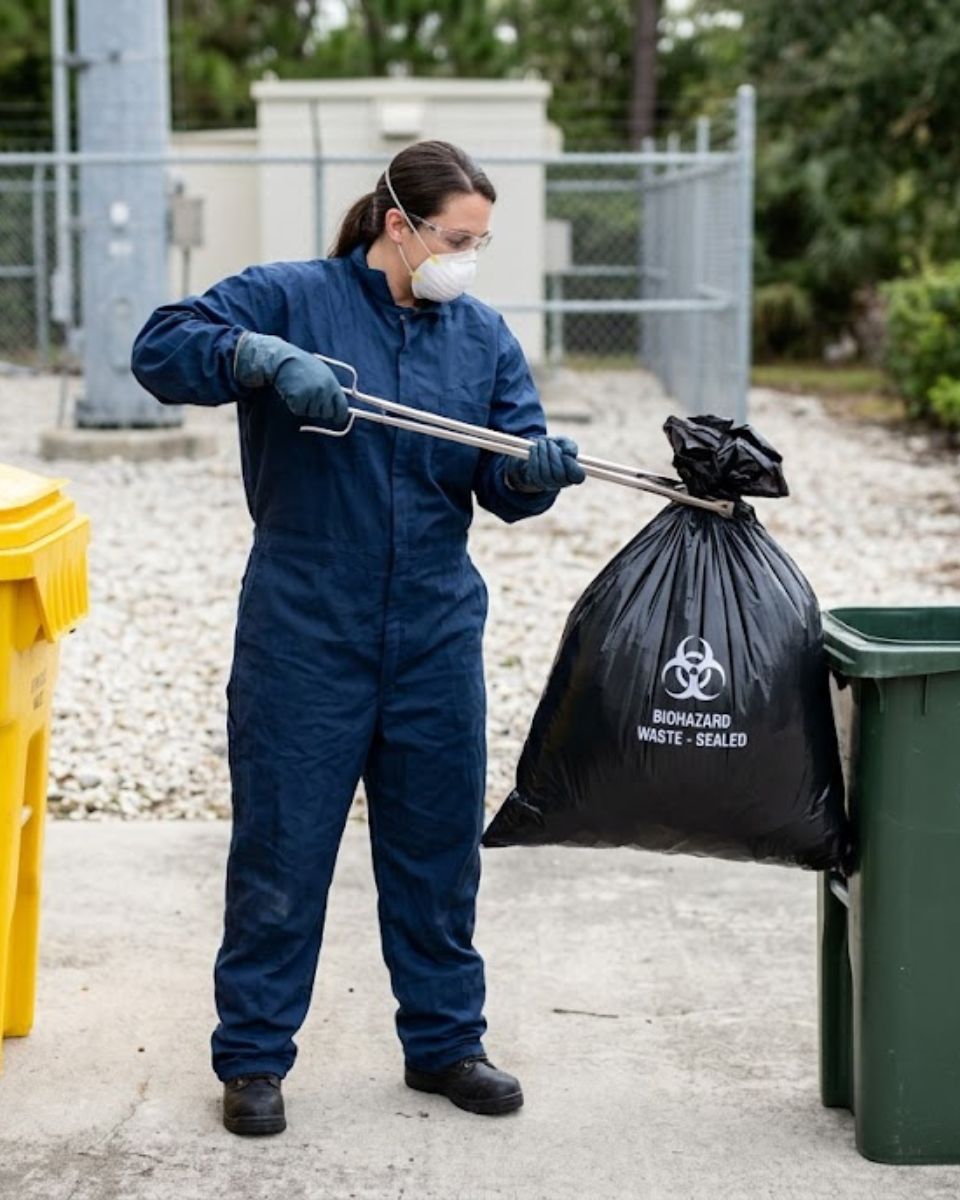
Carcass removed with PPE. Immediate area disinfected. Bagged and sealed for disposal.
We identify and seal the entry route the rodent used. Prevents recurrence in the same location.
Dead-rodent removal pricing depends primarily on access difficulty. Visible-and-reachable carcasses are at the low end; wall-cavity removal with cutting is at the higher end.
| Scope | What's included | Typical range |
|---|---|---|
| Accessible carcass removal | Attic, crawl, garage β no cutting needed | $250β$400 |
| Wall-cavity removal with scope | Carcass located via scope camera through existing access | $350β$550 |
| Wall-cavity removal with cutting | Drywall access required, single hole | $450β$650 |
| Multiple carcasses or difficult location | Multi-point removal or complex access | $600β$900 |
Dead rodent location and removal across Savannah. Scope-camera location, minimum drywall damage.
π Call (912) 305-0115Same-day during operating hours (9AMβ9PM). Most calls get a dispatch slot within 2β4 hours. Dead-rodent removal is one of our most common emergency calls because the smell is genuinely acute and customers want it resolved fast.
In Savannah conditions, typically 2β6 weeks. Peak intensity is usually days 4β10. The smell fades as the carcass dries out and decomposition completes. Some carcasses in well-ventilated spots fade faster; some in damp humid spots take longer. Most people can’t wait it out, particularly in occupied living spaces.
Often we don’t β scope cameras through existing penetrations work in many cases. When cutting is needed, we use the smallest practical access hole (4β6 inches), discuss with you before proceeding, and leave you with replacement drywall material your handyman can patch. We minimize damage.
The smell itself is mostly aggressive rather than actively dangerous, but extended exposure to decomposition gases is associated with headaches, respiratory irritation, and (in sensitive individuals) more serious symptoms. The bigger health risk is incidental β dead rodents attract flies and other secondary pests, and decomposition can contaminate adjacent insulation.
Humidity. Coastal Georgia’s year-round high humidity accelerates rodent decomposition compared to drier climates, which means a dead rodent here produces more aggressive odor faster than the same rodent would in Atlanta or Denver. Wall and attic spaces also retain humidity, slowing the drying-out that eventually reduces smell.
Once the carcass is removed and the area is sanitized, residual odor typically fades within 24β48 hours. Odor-neutralizing products (sprays, gels, charcoal absorbers) can speed up residual fading. They don’t work as substitutes for actually removing the carcass β the smell continues to be produced as long as the source is in place.
Sometimes β particularly when removal requires drywall cutting and the broader rodent issue is part of a covered claim. Standalone dead-rodent removal usually isn’t covered. We provide documentation if you want to file a claim.
Yes β decomposition odor attracts other rodents, secondary pests (blowflies, carrion beetles), and occasionally larger scavengers in exterior locations. Removing the carcass eliminates the attraction. This is one reason dead-rodent removal isn’t just a comfort issue β leaving it in place compounds the rodent problem.
Related Savannah services: same-day emergency dispatch Β· cleanup after dead-rodent removal Β· general Savannah rodent removal.
Trusted Coastal Georgia rodent specialists since 2023. Same-day inspection and quote β no charge.
π Call (912) 305-0115